Explore our high-performance electronic ballast systems, integrated LED drivers, and architectural lighting solutions engineered for global commercial networks.
Understanding Auto-Sensing Topologies, Power Quality Metrics, and Electronic Driver Physics in Modern Commercial Lighting Infrastructure.
Universal voltage electronic ballasts operate across dynamic input ranges, typically 120V to 277V AC in standard commercial networks, and 120V to 347V AC in specialized North American/Canadian industrial grids. Advanced integrated microprocessors eliminate manual voltage jumpers by dynamically adjusting internal pulse-width modulation (PWM) feedback loops to match line voltage.
High-tier universal ballasts integrate Active Power Factor Correction (PFC) stages achieving a Power Factor (PF) > 0.99 while holding Total Harmonic Distortion (THD) under 10%. This mitigates neutral conductor overheating, voltage sagging, and phase degradation across intensive commercial building power distribution boards.
Built with high-frequency solid-state components, robust ballasts incorporate transient surge suppression (ANSI/IEEE C62.41 Category A/B standards up to 6kV), thermal auto-foldback circuits, and automatic shutdown mechanisms upon tube end-of-life (EOL) to prevent thermal runaways and fixture degradation.
When engineering lighting retrofits or executing OEM fixture designs, specifying the exact ballast topology directly governs total cost of ownership (TCO), system reliability, and optical output efficacy. Modern high-frequency electronic ballasts operate at frequencies above 40 kHz, eliminating the line-frequency stroboscopic flicker (50/60 Hz) inherent to legacy magnetic ballasts.
| Technical Parameter | Standard Ballast Specification | Premium Universal Ballast Target | System Operational Impact |
|---|---|---|---|
| Input Voltage Range | Fixed 120V or 277V (±10%) | 120V - 277V / 120V - 347V Auto-Sensing | Reduces SKU complexity by 75%; universal SKU inventory management across global regions. |
| Power Factor (PF) | > 0.90 | > 0.98 @ Full Load | Minimizes reactive power drawn from utility grids; prevents peak-demand surcharges. |
| Total Harmonic Distortion (THD) | < 20% | < 10% (Optimum < 8%) | Protects sensitive electronic equipment on the same electrical network from EMI noise. |
| Ballast Factor (BF) | Fixed 0.88 | Selectable 0.77 (Low) / 0.88 (Norm) / 1.15 (High) | Allows precise tuning of lumen output versus power consumption according to site lighting design. |
| Lamp Current Crest Factor | < 1.7 | < 1.4 | Extends fluorescent/UV lamp operational lifetime by maintaining smooth sine-wave drive currents. |
A rigorous matrix used by enterprise procurement officers to vet manufacturing partners, audit production lines, and verify engineering reliability.
Top-tier manufacturers deploy automated high-speed SMT lines (Yamaha/Panasonic optical placement systems) ensuring pin-point registration for high-frequency transformers, IC controllers, and solid-state capacitors, reducing solder joint failures to single-digit PPM levels.
The lifespan of an electronic ballast is directly bounded by its electrolytic capacitors and MOSFET power switches. Elite factories utilize long-life 105°C Japanese electrolytic capacitors (e.g., Rubycon, Nichicon) guaranteeing 50,000+ hour operational MTBF.
Universal voltage ballasts operating under high ambient thermal stress require thermally conductive polyurethane or silicone encapsulation potting. This ensures uniform heat dispersion away from hot-spot components to the metal casing while providing IP65 humidity and vibration resistance.
To maximize lamp life in high-occupancy sensor application environments, qualified manufacturers utilize digital microcontrollers to precisely pre-heat cathode filaments before striking the arc, delivering over 100,000 switching cycles without degradation.
Leading factories house in-house darkrooms and EMI receivers to certify compliance with FCC Part 18 (Commercial Class A & Consumer Class B) and EN 55015 standards, ensuring zero radio interference with wireless network access points.
100% full-load burn-in testing under dynamic voltage cycling (switching rapidly between 120V and 277V at 65°C ambient chambers) guarantees that infant-mortality component defects are caught long before export shipment.
Ningbo Gravity Light Manufacturing Co., Ltd. was awarded the China National High-Tech Enterprise certification in 2021, backed by over 20 years of deep expertise in semiconductor innovation, PCB layout design, custom ballast transformer winding, and high-end COB packaging integration.
By leveraging the robust industrial cluster of Ningbo’s electronic ecosystem, we source premium magnetic raw materials, advanced IC drivers, and specialized metal enclosures at optimized cost scales, providing global B2B clients with unrivaled competitive advantages.
How upgrading to universal auto-sensing electronic ballasts optimizes capital expenditure, reduces facility maintenance costs, and yields high ROI.
Instead of stocking multiple distinct ballast SKUs for 120V residential/retail line voltages, 208V/240V commercial setups, and 277V industrial grids, procurement teams maintain a single Universal Voltage SKU. This reduces warehouse safety stock holding costs by up to 60% and eliminates installation wiring errors caused by mismatched voltage ratings.
High-efficiency electronic ballasts operating at high frequencies deliver up to 30% greater system efficacy (lumens per watt) compared to traditional magnetic ballasts. Operating at cooler thermal footprints decreases internal building HVAC load requirements, creating a compound energy-saving effect across large facilities.
Featuring programmed soft-start ignition and active thermal management, modern universal ballasts prevent premature end-blackening of lamps. Facility operators experience extended relamping cycles, slashing maintenance labor fees in high-ceiling industrial warehouses and commercial office towers.
Navigating international safety certifications, environmental directives, and energy efficiency mandates across major global markets.
Compliant with UL 935, UL 8750, and Class P thermal isolation rules. Certified for field wiring within commercial luminaires across North American electrical codes.
UL / ETL ListedAdhering to EN 61347-1, EN 61347-2-3 for safety, and EN 55015 for low EMI emissions. Fully compliant with RoHS Directive restriction of hazardous substances.
CE / RoHS CompliantMeeting Japanese Electrical Appliance and Material Safety Law (PSE mark) and South Korean KC certification standards for voltage stability under fluctuating grid networks.
PSE / KC CertifiedEngineered to assist commercial spaces in achieving compliance with California Energy Commission (CEC) Title 24 efficiency mandates and DesignLights Consortium (DLC) premium ratings.
Energy Star / DLCDeploying reliable electronic power supplies across specialized industrial, medical, retail, and horticultural environments.
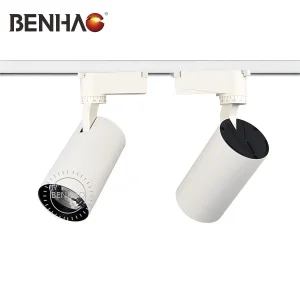
In high-end retail boutique settings, power supplies must deliver ultra-stable DC driver currents and silent high-frequency ballast power to modern track lighting systems, maintaining steady color rendering indexes (CRI > 90) without subtle light modulation that causes customer eye fatigue.
High-bay fixtures operating in environments with significant ambient temperature swings (-20°C to +50°C) demand heavy-duty universal ballasts built with potted aluminum enclosures capable of handling line voltage surges caused by heavy machinery switching.
Controlled environment agriculture (CEA) requires high-output ballasts running high-pressure sodium (HPS), metal halide (MH), or specialized UV/LED spectrum panels continuously for 18+ hours daily under high humidity conditions.
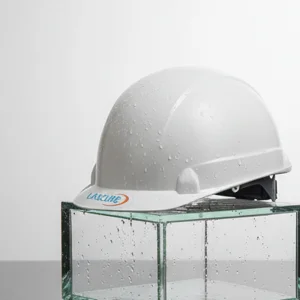
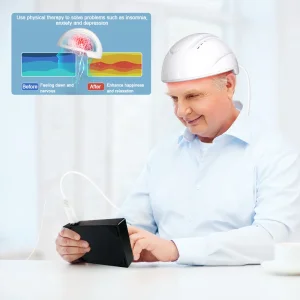
Precision medical light therapy equipment (such as photobiomodulation helmets, FDA-cleared LLLT devices, and red light therapy panels) mandates medical-grade low-noise power units with ultra-low leakage currents and precise wavelength stability.
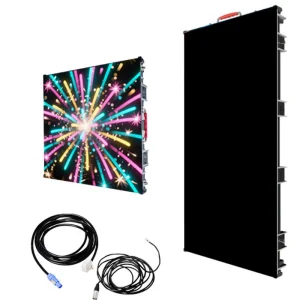
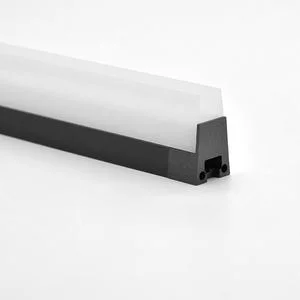
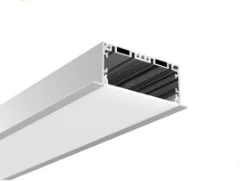
Linear pendant lighting, custom curved display screens, and outdoor architectural accent lighting require linear slim-profile universal ballasts capable of fitting inside restricted aluminum extrusion channels with IP67 weather sealing.
Universal input designs equipped with emergency battery-backup changeover relays guarantee automatic transition to DC battery power during main grid power blackouts in public safety infrastructure.
How next-generation semiconductor topologies and IoT protocols are transforming legacy electronic ballasts into intelligent lighting nodes.
The integration of GaN FETs in universal input stages allows electronic ballasts and LED drivers to operate at significantly higher switching frequencies (MHz range). This drastically shrinks the required physical size of magnetic inductors and capacitors, resulting in ultra-compact, ultra-thin form factors with power conversion efficiencies surpassing 95%.
The lighting industry is witnessing a massive transition toward hybrid LED tube drivers. Next-generation universal ballasts are engineered to support direct plug-and-play Type A operations while seamlessly adapting to direct-wire Type B configurations during emergency maintenance upgrades, offering ultimate building retrofitting flexibility.
Modern universal ballasts are no longer standalone passive power devices. They serve as intelligent communication nodes integrated with DALI-2 (Digital Addressable Lighting Interface) multi-master buses or wireless protocols (Zigbee/Matter), enabling automated daylight harvesting, occupancy-based continuous dimming, and real-time energy reporting.
Incorporating digital signal processors (DSP) inside the ballast control circuit allows continuous measurement of internal capacitor temperature, input voltage harmonics, and lamp impedance. The ballast can send automated failure alerts over the building management system (BMS) before an actual component breakdown occurs.
Technical and procurement answers to common queries regarding universal voltage ballast selection, installation, and manufacturing customization.
Discover our broader catalog of commercial linear systems, specialized photobiomodulation units, architectural display panels, and high-efficiency drivers.
 Gravity Light