The international hazardous location (HazLoc) lighting industry is undergoing a seismic paradigm shift. Traditional high-intensity discharge (HID), high-pressure sodium (HPS), and metal halide luminaires are rapidly phasing out in favor of Advanced Solid-State LED technology. Modern explosion-proof LED systems do more than prevent sparks; they act as thermal-management platforms engineered to sustain structural integrity within volatile atmospheres.
With stricter global safety requirements from bodies like the European Union's ATEX Directive and OSHA's NRTL program, manufacturing standards have risen. The integration of IoT sensors, smart wireless controls, and dynamic dimming profiles into explosion-proof fixtures enables real-time temperature, gas, and structural health monitoring in heavy industrial facilities.
Unlike standard industrial lighting, explosion-proof systems must dissipate heat without exposing internal high-temperature components or electrical arcs to external volatile mixtures. Effective heat-sinking using premium die-cast copper-free aluminum alloys prevents thermal runaway, ensuring the fixture surface remains below the auto-ignition threshold of the surrounding ambient gases.
Transitioning from basic illumination to network-connected sensor arrays, integrating environmental monitoring directly into hazardous area light fixtures.
Reaching system levels of up to 160 lm/W, minimizing operational electricity costs and heat generation within sealed structural envelopes.
Navigating standard codes is critical. Buyers must align target environments with global safety ratings (ATEX, IECEx, UL844, NEC 500, NEC 505) to ensure operational viability.
| Regulatory System | Jurisdiction | Key Classifications | Typical Environments |
|---|---|---|---|
| ATEX (Directive 2014/34/EU) | European Union / Global | Zone 0, Zone 1, Zone 2 (Gas); Zone 20, 21, 22 (Dust) | Offshore drilling rigs, major petrochemical processing plants, marine tankers. |
| IECEx System | International Global | Ex d (Flameproof), Ex e (Increased Safety), Ex t (Dust Protection) | Unified global scheme for electrical equipment operating in explosive atmospheres. |
| NEC 500 / UL 844 | North America (USA, Canada) | Class I, II, III (Div 1 & Div 2); Groups A, B, C, D, E, F, G | Grain processing facilities, paint spray booths, pharmaceutical dry-mixing rooms. |
| CCC Ex / GB Standards | China | Zone 1, Zone 2, Temperature Codes T1 through T6 | National heavy industries, chemical logistics centers, state grid facilities. |
Designed to withstand internal gas explosions, cooling escaping combusted gas below the ignition temperature before it reaches external atmospheres.
Focuses on preventing sparks, arcs, or localized hot spots via strict component clearances and enhanced electrical termination safety margins.
Guarantees structural resistance to extreme water pressure jets and microfine dust penetration, preventing mechanical decay in high-salinity environments.
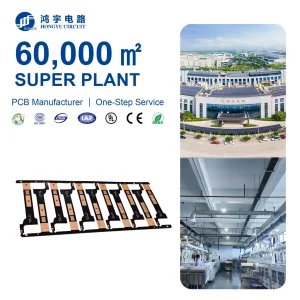
Figure 1: Automated SMT Lines and Optical Packaging Infrastructure at Ningbo Gravity Light Manufacturing.
The transition to Industry 4.0 paradigms defines the modernization of explosion-proof LED manufacturing. At state-of-the-art facilities, automatic pick-and-place surface mount technology (SMT) machines interface with high-accuracy optical test chambers. This ensures precise thermal pad soldering, eliminating microscopic voids that could lead to hot-spot failure in hazardous zones.
By consolidating chip packaging, driver engineering, and structural die-casting under single-roof quality assurance structures, Tier 1 manufacturing centers drastically lower structural vulnerability. Advanced automated optical inspection (AOI) processes review critical components, confirming the target safety standards (ETL, CE, RoHS) before final shipment.
Through robust domestic component integration and design patents (e.g., System-level Integrated Lighting Modules), production networks minimize supply chain disruptions, ensuring stable pricing and reliable delivery to global markets.
Deploying explosion-proof systems demands custom designs tailored to localized chemical, physical, and temperature variables.
Highly volatile gas concentrations (Group IIB+H2 or Class I, Div 1) require heavy-duty flameproof housings and chemically resistant powder coatings to withstand acidic atmospheres.
High relative humidity and continuous saltwater contact demand marine-grade structural materials (e.g., 316 stainless steel accessories, copper-free aluminum, salt-fog testing validation).
Combustible dust clouds (Class II, Div 1 / Zone 21) require low exterior temperature limits (T-code rating) and tight sealing to prevent combustible layers from forming on warm surfaces.
Awarded the China National High-Tech Enterprise certification in 2021, Ningbo Gravity Light Manufacturing Co., Ltd. features over 20 years of expertise in high-performance packaging and semiconductor design. Specializing in high-end chip-on-board (COB) technology, robust printed circuit board (PCB) design, and hazardous area lighting engineering, the company stands as a top-tier manufacturer of industrial light sources.
Our manufacturing capabilities go beyond basic component delivery. We establish long-term development relationships with international organizations, delivering certified system-level integrated lighting modules to satisfy rigorous hazardous environment standards globally.
Our products serve key markets including the United States, Vietnam, Japan, Great Britain, Italy, Russia, India, Brazil, Spain, and the Middle East.
"High Quality, Zero Defect" — executing rigorous validation protocols across the complete design, component supply, and product packaging lifecycle.
Common design concerns and safety standards addressed by engineering experts.
 Gravity Light