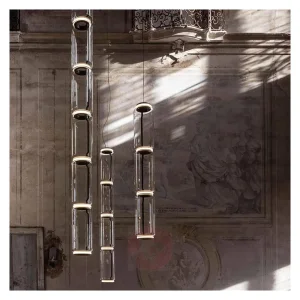
In high-end architectural design, the grand lobby acts as the definitive spatial handshake. An entrance lobby is no longer a mere transition zone; it is a brand statement, an experiential hub, and a key factor in spatial psychology. At the center of this experience lies the custom grand chandelier. Engineering these colossal installations requires a delicate convergence of architectural design, structural mechanics, custom optical design, and cutting-edge lighting technologies.
Lobby heights in class-A office towers and luxury hotels now regularly exceed 8 to 15 meters. Traditional static lighting fixtures fail to command such volume. Designers are shifting toward structural, dynamic installations that act as luminous sculptures during the day and ambient art installations at night.
Integrating circadian rhythm lighting is a core requirement. Modern lobby lighting systems utilize smart tunable white tech (2200K to 6500K) to mirror natural light variations, reducing fatigue for transiting corporate professionals and hotel guests alike.
IoT-enabled control protocols like DALI-2, DMX512, and wireless architectures (ZigBee/Casambi) are critical requirements. Lobby chandeliers must communicate with building management systems (BMS) for auto-dimming and demand-response power controls.
Architectural lighting specifiers, developers, and hospitality project managers operate within high-risk environments. Sourcing massive custom installations involves navigating regulatory, mechanical, and logistical hazards.
A high-quality grand lobby chandelier must meet strict safety parameters. From wind shear calculations in open-air lobbies to seismic calculations in earthquake zones, engineering documentation is just as critical as visual style.
As the global manufacturing ecosystem transitions to high-mix, custom-volume demands, the Chinese manufacturing sector has adapted via advanced smart logistics, high-precision automated manufacturing, and robust vertical supply chains.
At Ningbo Gravity Light Manufacturing Co., Ltd., recognized as a China National High-Tech Enterprise, this industrial evolution is evident in daily operations. Boasting over 20 years of research and production expertise in LED packaging and semiconductor innovations, Gravity Light manages the customization process from high-power COB packaging to system-level structural designs.
This integrated model ensures that customized grand lobby chandeliers are engineered from the chip level up. Controlling the semiconductor packaging process allows Gravity Light to match the exact binning, thermal dissipation, and color temperature profiles required for high-stakes projects, mitigating risks associated with component mismatched sourcing.
This semiconductor-level control enables high-output stability, avoiding color shift issues that commonly affect custom large-scale installations over long operating periods.
By combining high-power COB semiconductor packaging, customized structural PCB manufacturing, and comprehensive CNC assembly under one roof, we eliminate third-party delays. For global buyers, this means faster custom design prototypes, precise photometric calculations (IES files), and consistent product compliance.
Awarded the China National High-Tech Enterprise certification, Ningbo Gravity Light has specialized in packaging and semiconductor innovations for over two decades. Specializing in high-end COB technology, custom PCB design, and specialized architectural lighting solutions, Gravity Light delivers reliability across global commercial landscapes.
Our engineering services focus on custom designs, including bi-color arrays, architectural structures, smart integrations, and high-intensity specialty light sources for projects worldwide.
To support global imports and installations, all Gravity Light systems conform to international certifications, including CE, RoHS, ETL, KC, and PSE.
We provide structural packaging, impact-safe crating, and optimized ocean and air logistics, ensuring safe and timely delivery for large installations.
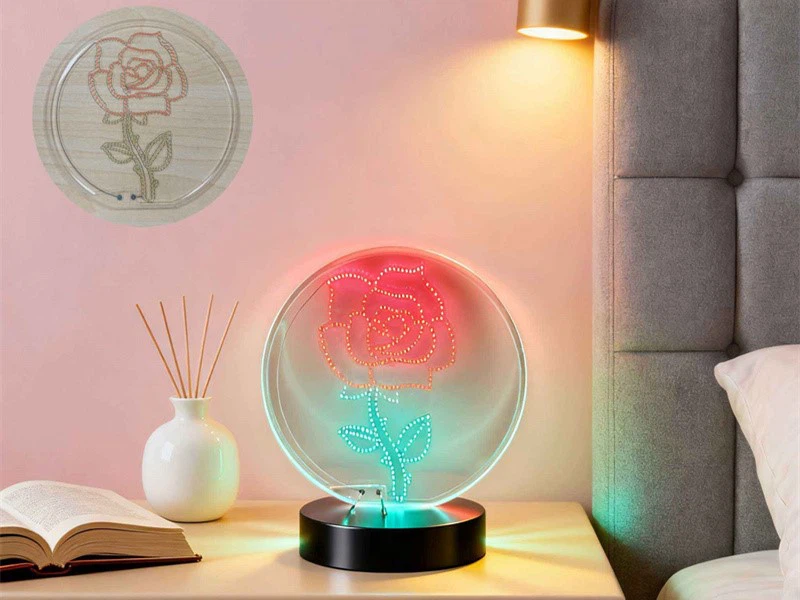
Grand lobby lighting installations must be designed with their specific environments in mind. A high-end hotel lobby, a corporate headquarters, and a major transit hub all demand distinct functional and performance profiles.
 Gravity Light