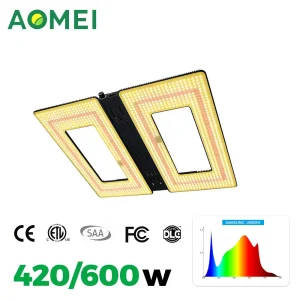
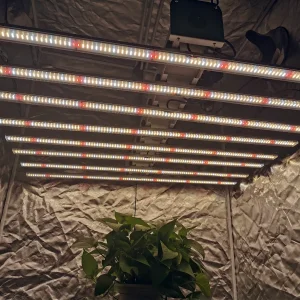
Specially configured spectrums tailored to offset low natural light periods during the rainy season and to maximize crop yield profiles for tropical agricultural operations in regions like Kinshasa, Lubumbashi, and Kisangani.
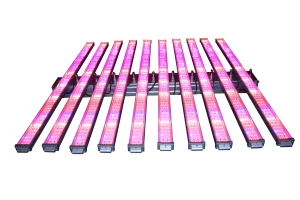
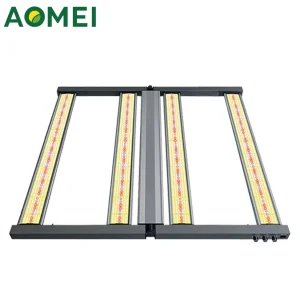
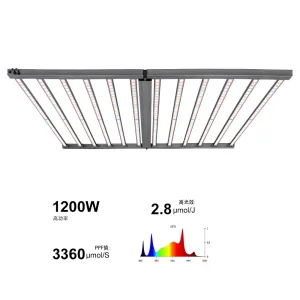
The Democratic Republic of the Congo (DRC) holds some of the most fertile arable land on earth, yet it faces unique agricultural challenges related to food security, urban supply lines, and extreme weather variances. As urbanization accelerates in Kinshasa and industrial hubs like Lubumbashi expand, the demand for local, consistent food production has skyrocketed. Controlled Environment Agriculture (CEA) offers a robust solution, enabling growers to secure high-quality vegetable yields year-round independent of soil degradation and unpredictable tropical precipitation patterns.
However, establishing commercial CEA installations in Sub-Saharan Africa requires equipment built to withstand rigorous localized parameters. The DRC climate features prolonged humid seasons, elevated ambient temperatures, and regional electrical grid fluctuations. Conventional indoor grow lights deteriorate rapidly under high humidity (RH > 85%) or fail during voltage drops. To solve this, our full-spectrum LED horticulture lighting is engineered with advanced passive heat dissipation (fanless design to avoid mechanical failure), IP65/IP67 ingress protection, and heavy-duty industrial drivers capable of handling wide input voltages (AC277-480V) or interfacing directly with hybrid solar-microgrids.
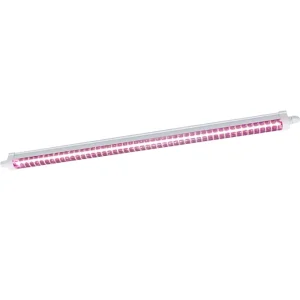
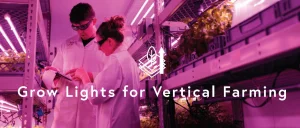
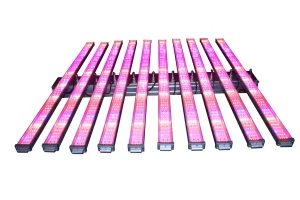
With a population exceeding 17 million, Kinshasa relies heavily on imported food, driving up prices. Indoor vertical farms equipped with high-PPE T8 or modular LED bars allow local entrepreneurs to produce leafy greens, herbs, and propagation material in multi-tier racks. This drastically reduces transit times, maintains nutritional value, and operates with up to 95% less water than traditional soil farming.
The Eastern DRC (Kivu regions) is renowned for high-value specialty crops like arabica coffee and fine cacao. Modern greenhouse propagation nurseries utilize supplemental full-spectrum lighting to accelerate seedling root development. Providing precise ratios of Deep Red (660nm) and Far-Red (730nm) photobiology triggers faster vegetative growth, ensuring robust seedlings ready for field transplanting.
Internationally, the indoor cultivation market has transitioned from energy-intensive High-Pressure Sodium (HPS) systems to smart, high-PPE (Photosynthetic Photon Efficacy) LED engines. Leading commercial cultivators target efficacy ratings above 2.7 μmol/J to minimize operational expenditure (OpEx). At Ningbo Gravity Light Manufacturing Co., Ltd., we combine our 20+ years of semiconductor innovation and high-end COB (Chip-on-Board) packaging expertise to develop industry-leading horticultural systems.
Unlike generic lighting suppliers, we customize PCB layouts and spectrum output ratios. We utilize premium diode configurations (such as Samsung LM301H Evo and specialized high-efficacy 660nm deep red chips) to achieve stable photon flows that maximize photosynthetic efficiency. Below is an overview of our customized spectral configurations compared to standard industrial baselines:
| Spectrum Component | Target Wavelength (nm) | Growth Stage Focus | Biological Impact | DR Congo Benefit |
|---|---|---|---|---|
| UV & Near-UV Blue | 380nm - 450nm | Vegetative / Nursery | Stimulates secondary metabolites, thickens leaves, controls internode stretching | Robust seedlings capable of resisting tropical pests after transplanting |
| Broad White Spectrum | 3000K + 5000K | Full Cycle / Balanced | Deep canopy penetration, provides human-friendly work environment | Consistent indoor crop health assessments under uniform light profiles |
| Deep Red | 660nm | Flowering & Fruiting | Optimizes Photosystem II, increases yield volume & biomass | Maximizes production volume in indoor leafy green and tomato farms |
| Far-Red | 730nm | Photoperiodic Triggering | Accelerates flowering onset via the shade avoidance response | Shortens cultivation cycles, increasing crop rotations per year |
Awarded the prestigious China National High-Tech Enterprise certification in 2021, Ningbo Gravity Light Manufacturing Co., Ltd. has stood at the forefront of semiconductor innovation and specialized packaging for over 20 years. Our core competency lies in the advanced engineering of high-end COB technology, custom PCB design, and highly efficient thermal interfaces. We are not just assembly line operators; we are precision component developers who control quality starting from the diode level.
To guarantee absolute reliability across demanding international markets—including the emerging agricultural sectors of the Democratic Republic of the Congo—we run our facilities under strict "High Quality, Zero Defect" production disciplines. Every design we ship holds verified global certifications (RoHS, CE, ETL, KC, PSE, and others), confirming electrical integrity and safe operation under challenging industrial grid load environments.
Tailored LED arrays for bi-color systems, vertical farming, hydroponic setups, and high-altitude research facilities.
Strict adherence to ETL, CE, and RoHS standards to guarantee safety and import clearance through local ports.
Customs-cleared logistics pathways to Kinshasa, Lubumbashi, and Matadi Port, ensuring swift, safe transit.
Direct access to our semiconductor design team for custom calculations of target PPFD and DLI requirements.
For large-scale food production operations in cities like Lubumbashi or Goma, electrical infrastructure and high atmospheric humidity present real operational hazards. Our engineering address these constraints through two major design principles:
Recognizing that municipal power systems in the DRC can suffer from frequent interruptions, many modern agricultural startups run on off-grid solar arrays or hybrid microgrids. We offer customized driver topologies that operate seamlessly on high-efficiency solar outputs or handle AC inputs from 277V up to 480V. This protects your grow lights from voltage spikes and grid dips, maximizing equipment lifetime.
Indoor cultivation spaces are humid environments where transpiration creates constant moisture condensation. Combined with tropical ambient air, standard light enclosures suffer from rapid corrosion or short circuits. Our high-performance fixtures utilize specialized non-corrosive aluminum heat sinks, sealed silicone gaskets, and protective conformal coatings on the PCB layers. This prevents moisture, dust, and particulate matter from degrading the sensitive LED diodes.
Select from our certified high-performance horticultural lighting range. We provide optimized configurations and regional delivery terms for farming operations throughout the Democratic Republic of the Congo.
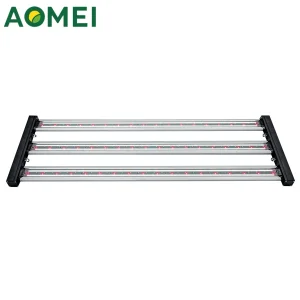
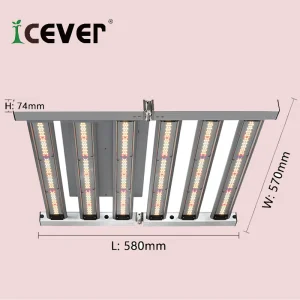
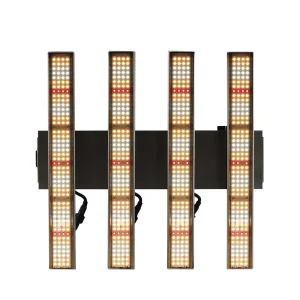
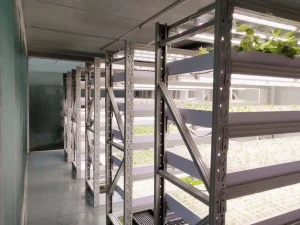
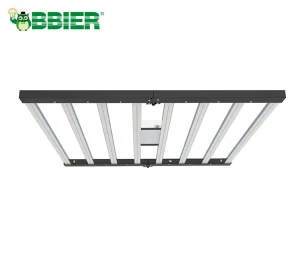
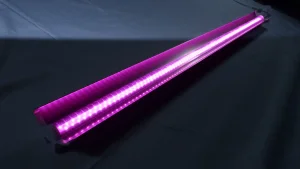
As agricultural technology evolves, we focus on driving energy efficiencies down while increasing yield capabilities. Our research and development focuses on the following key areas:
By integrating next-generation Samsung LM301H Evo diode platforms and developing refined PCB layouts, we target fixture efficacies of up to 3.2 μmol/J, significantly lowering the power requirements for large-scale operations.
Future models will include smart control protocols allowing growers to dynamically adjust the ratio of blue, white, deep red, and far-red light through cloud platforms or local central controllers.
We are standardizing direct low-voltage DC drive inputs across our modular product lines, helping off-grid growers in remote DRC areas avoid the power loss associated with DC-to-AC inverters.
Here are direct, technical answers to common questions about using our professional LED grow light systems in Central African climates.
 Gravity Light