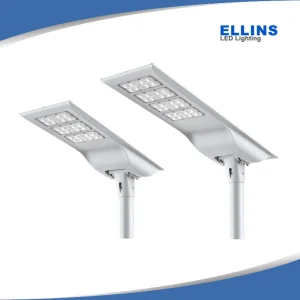
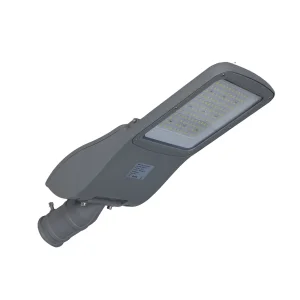
In the contemporary era of rapid urbanization and environmental consciousness, the global market for sustainable street illumination has transitioned from a niche luxury to a critical infrastructure requirement. Cities across Europe, North America, and emerging markets in Asia are aggressively replacing legacy high-pressure sodium (HPS) lamps with high-efficiency LED and renewable-energy-powered systems. This shift is primarily driven by the "Carbon Neutrality" goals set by international climate agreements, where public lighting accounts for nearly 40% of a municipality's total electricity bill.
By 2050, 68% of the world's population will live in cities, necessitating millions of new lighting points.
Rising energy costs have accelerated the demand for self-sufficient solar and wind-powered lighting solutions.
Smart streetlights are becoming the "backbone" of smart cities, hosting 5G small cells and environmental sensors.
The industry is currently witnessing a massive integration of Artificial Intelligence (AI) and Internet of Things (IoT). Modern sustainable streetlights are no longer just passive luminaires; they are intelligent nodes capable of motion-sensing, adaptive dimming, and real-time fault reporting. These features can reduce energy consumption by an additional 30-50% compared to standard LEDs. Furthermore, the development of "Gravity Light" technology and "Bioluminescent" panels represents the next frontier in zero-carbon illumination, offering lighting solutions for off-grid regions without the need for traditional batteries.
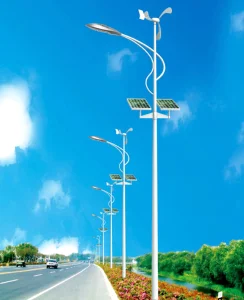
For international buyers, wholesalers, and municipal contractors, procuring street illumination involves balancing initial capital expenditure (CAPEX) with long-term operational expenditure (OPEX). Key requirements from global procurement officers include:
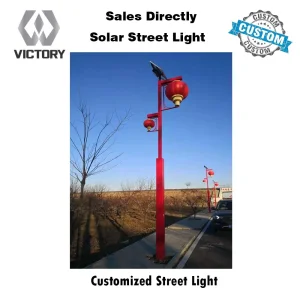
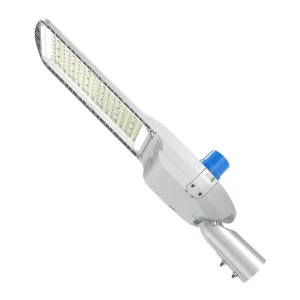
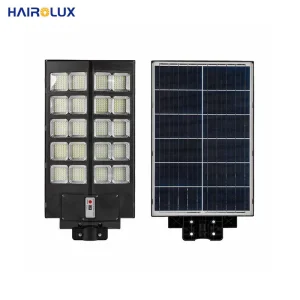
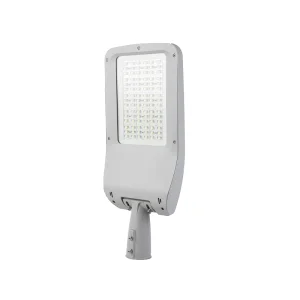
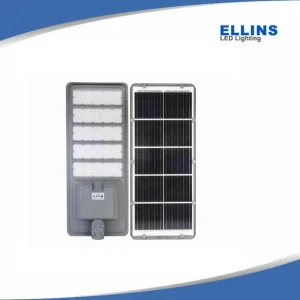
Sustainable street illumination finds its place in diverse settings. In smart urban centers, integrated LED poles facilitate traffic management. In remote rural areas of India or Brazil, off-grid solar streetlights provide safety and extend social activities after sunset without expensive grid infrastructure. Industrial parks and logistics hubs utilize high-output 300W luminaires with motion sensors to ensure security while minimizing light pollution. Each scenario requires a tailored approach—something that high-end Chinese manufacturers are uniquely positioned to provide.
Ningbo Gravity Light Manufacturing Co., Ltd. (LHD) stands at the forefront of the lighting revolution. Awarded the China National High-Tech Enterprise certification in 2021, LHD brings over 20 years of expertise in semiconductor innovation and packaging to the global stage. As a premium manufacturer and exporter, we specialize in high-end COB technology and sustainable lighting solutions that bridge the gap between innovation and practical application.
Our commitment to "High Quality, Zero Defect" is not just a slogan—it is embedded in our supply chain, engineering design, and rigorous quality control protocols. With two decades of R&D in Gravity Light packaging, we provide tailored solutions for diverse applications, from drones and fishing to smart city streetlights and horticultural lighting.
R&D expertise in semiconductors and advanced lighting modules.
Exporting to the USA, Vietnam, UK, Italy, Russia, India, Brazil, and the Middle East.
RoHS, CE, ETL certifications and Utility Model Patents for integrated modules.
LHD's product portfolio is vast, ensuring we can meet the requirements of any project:
Commercial Lighting, Indoor/Outdoor Lighting, Industrial Lighting, Landscape Lighting, Horticultural Lighting, UV Lighting, Emergency Lighting, Specialty Lighting, Traffic Lighting, Intelligent Lighting, Drone Lighting, Health and Medical Lighting.
By choosing LHD, wholesalers and distributors gain more than just a supplier; they gain a strategic partner. Our services are designed to fuel your business growth through:
The future of public illumination is sustainable, smart, and reliable. At LHD, we strive to be the world-famous brand of high-end Gravity Light sources, driving the industry toward a greener, brighter tomorrow.
 Gravity Light