Why avoid blue light exposure before going to sleep? The answer involves both biology and everyday habits. Bright light in the evening can affect the body’s sleep-wake signals, while scrolling, messaging, or watching videos may keep the mind alert. A phone glowing beside the pillow at 11:30 p.m. is a familiar scene, but its impact differs from person to person. Timing, brightness, and personal sensitivity all matter. Glasses are not a guaranteed fix.
This guide explores how to assess blue-light glasses available in China, from lens claims and frame comfort to product information and return policies. Look for clear specifications, including what the lenses are designed to filter, rather than relying on vague promises about better sleep. Fit matters too: frames that pinch your nose or slide down during reading are unlikely to become a lasting habit. Evidence on blue-light-filtering glasses and sleep remains mixed, so treat them as one possible tool, not a substitute for dimming screens or keeping a steady bedtime. Small changes help. I should be careful here: product labels can sound more certain than the research. The goal is not to fear every screen, but to make a practical, informed choice and notice what actually helps you rest.
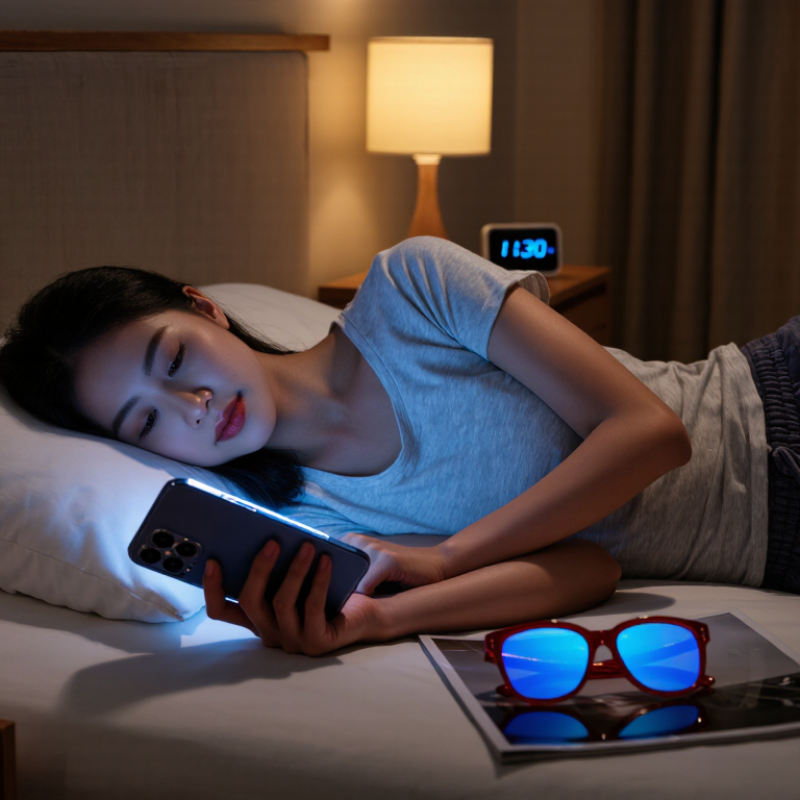
Blue light is a part of visible light, not a feature found only in screens. In the evening, common sources include phone displays, tablets, computer monitors, televisions, and cool-white LED bulbs. A bright ceiling light can expose you to more light than a dim screen held across the room. Small sources add up.
The timing and brightness of light matter. Evening light can signal alertness to the body and may delay the natural shift toward sleep, though people respond differently. Distance, screen brightness, and how long you use a device also affect exposure. It is tempting to blame one glowing phone, but the whole room matters. I sometimes notice the overhead light more than my screen; that is an easy detail to miss. Blue-light glasses may reduce some blue wavelengths, but they cannot make a bright, late-night room dark.
Tips: Dim overhead LEDs after sunset and choose warmer lighting when practical. Lower screen brightness, increase text size, and take a short screen break before bed. Try changing one habit at a time, then notice whether it helps your sleep.
Evening light can shift the body’s sleep-wake rhythm by delaying melatonin, the hormone that helps signal nighttime. In a 2011 study in the Journal of Clinical Endocrinology & Metabolism, ordinary room light before bed suppressed melatonin in nearly 99% of participants and shortened its nightly duration by about 90 minutes, compared with dim light. Blue-enriched light can be particularly alerting, but brightness, exposure time, and distance from the source also matter. A bright ceiling lamp may affect your evening more than a briefly checked, dim phone. Small details count.
A 2015 Proceedings of the National Academy of Sciences study followed 12 adults who read from light-emitting e-readers for five evenings. Compared with printed books, e-reader use delayed circadian timing and made participants take longer to fall asleep. That small study is informative, not a promise that everyone responds identically. Blue-light-filtering glasses may reduce some short-wavelength exposure, but research on their sleep benefits is mixed; they cannot replace a darker, calmer evening. I still find it easy to underestimate a bright kitchen light. Try lowering room lighting and screen brightness during the hour before bed, then notice whether your sleep timing changes.
Phones, tablets, and bright room lights can keep the brain alert when bedtime is near. Blue-rich light may influence the body’s circadian clock and delay the release of melatonin, a hormone involved in sleep timing. The effect varies with brightness, exposure time, and personal habits. One late screen session does not affect everyone equally.
Limiting bright screens for about an hour before bed may make it easier to wind down, though it cannot guarantee better sleep. Try dimming the lights and choosing a paper book or quiet routine instead. A warm, low-lit room can feel calmer than a glowing screen beside your pillow. Small changes help. I still find it easy to reach for my phone, so a consistent routine takes practice.
Tips: Set a screen curfew that feels realistic, such as 30 to 60 minutes before bed. Lower screen brightness and enable a warmer display setting in the evening. Keep the phone across the room, and avoid checking the time repeatedly. If sleep problems persist, consider discussing them with a qualified healthcare professional.
| Topic | What Is Known | Practical Takeaway |
|---|---|---|
| Blue-light range | Blue light is commonly described as visible light with wavelengths of roughly 400–500 nanometers. It comes from daylight as well as many indoor and electronic light sources. | Consider the brightness and timing of light exposure, not just whether a screen is being used. |
| Light and body clock | Light reaching the eyes in the evening can affect circadian timing and melatonin rhythms. The response depends on factors such as brightness, duration, timing, and individual sensitivity. | Keep evening lighting comfortable and relatively dim as bedtime approaches. |
| Screens before bed | Screen light varies by device settings, brightness, distance, and duration. Engaging content and bedtime displacement can also make it harder to wind down. | Reduce screen brightness, use a warmer display setting if helpful, and set aside time to relax before bed. |
| Blue-light-filtering glasses | Filtering strength varies by lens. Research on whether these glasses consistently improve sleep is mixed, so results should not be assumed for every wearer. | Treat glasses as an optional aid, not a guaranteed solution or a substitute for healthy sleep habits. |
| Daytime light | Regular daytime light exposure helps support a stable sleep–wake rhythm. Light is not inherently harmful; its timing matters. | Get outdoor light during the day when practical, and make the sleep environment darker at night. |
| A balanced bedtime routine | Sleep is influenced by multiple factors, including schedule, stress, caffeine, environment, and light exposure. | Pair reduced evening light with a consistent sleep schedule and a quiet, comfortable bedroom. |
Blue-light-filtering glasses use tinted or coated lenses to reduce some short-wavelength light reaching the eyes. How much they filter depends on the lens, and labels do not always tell the whole story. A warmer screen or dim room may reduce exposure too. The details matter.
Evening light can influence the body’s circadian rhythm, especially when it is bright and close to bedtime. Some studies suggest filtering glasses may help certain people, but results are mixed. They are not a guaranteed sleep aid. Dimming screens, lowering room lights, and keeping a regular bedtime may be more useful than relying on glasses alone. Small habits add up.
These glasses cannot block every kind of light, reset a disrupted sleep schedule, or treat insomnia. They also may not relieve digital eye strain, which can come from long periods of close focus and reduced blinking. I would not assume that a clearer, amber-colored lens means better sleep. If sleep problems persist, consider discussing them with a qualified health professional.
Blue-light glasses are easy to find in China through optical shops and online marketplaces. Compare lens details, seller information, and return terms rather than relying on dramatic claims. Some lenses reduce certain wavelengths, but evidence that they prevent eye strain or reliably improve sleep is limited. Screen glare, long viewing sessions, and late-night light can also matter. No lens is magic.
Tips: Check that the lenses look clear and do not distort text or colors. Try the frame on; it should sit comfortably without pressing your nose or temples. If you need prescription lenses, ask an optician whether the coating suits your prescription. Keep the receipt.
Think about when you will wear them. For evening use, dim your screen and take a break before bed; these steps may help more than glasses alone. If you experience headaches or blurred vision, consider screen distance, lighting, and an eye-care professional’s advice. A low price can be tempting, but unclear specifications make comparison difficult. That part is easy to miss. Choose based on fit and transparent product information, not a promise of better sleep.
Approximate wavelengths of visible light and blue light
Blue light is commonly described as roughly 400–500 nm, though boundaries vary by reference. Evening light exposure can affect the body’s circadian system; brightness, timing, and duration also matter. When comparing glasses available in China, look for clear wavelength-specific transmission information and independent test documentation rather than relying on a “blue-light blocking” label alone. Glasses are not a substitute for dimming screens and room lighting before bed.
Note: Wavelength ranges are approximate; visible-spectrum limits and blue-light boundaries vary among references.
It is part of visible light, not something found only on screens. Phones, televisions, computer displays, and cool-white LED bulbs can contribute.
Yes. A bright ceiling light may expose you to more light than a dim phone across the room. Small sources add up.
Bright evening light may delay melatonin release and shift the body’s sleep-wake rhythm. People respond differently.
No. Brightness, viewing time, distance, and personal habits all matter. One late screen session will not affect everyone equally.
A small study of 12 adults found delayed body-clock timing and longer time to fall asleep than with printed books. It cannot predict everyone’s response.
No. They may reduce some short-wavelength light, but evidence about sleep benefits is mixed. They cannot darken a bright room.
Dim overhead LEDs, lower screen brightness, and use warmer lighting when practical. Try a paper book or quiet routine.
You could try 30 to 60 minutes, or start with a shorter break. I still reach for my phone sometimes, so consistency takes practice. Small changes help.
Consider speaking with a qualified healthcare professional. A lighting change may help, but it may not explain everything.
Why avoid blue light exposure before going to sleep? Evening light from phones, computers, televisions, and bright indoor lighting can signal alertness to the body and may interfere with its natural sleep-wake rhythm. Reducing screen brightness, using warmer lighting, and creating a calmer pre-bed routine may help limit this effect and make it easier to prepare for sleep. These habits can support better rest, though individual experiences vary.
Blue-light-filtering glasses are designed to reduce some short-wavelength light reaching the eyes, but they cannot block every source of evening light or guarantee improved sleep. When choosing glasses available in China, consider comfort, fit, lens clarity, and transparent information about their filtering performance. They are best viewed as one possible part of a broader routine that includes dimmer evening lighting and less screen use before bedtime.

Gravity Light